
Petrol Pump Accounting Software for Daily Accounts, Credit and Expenses
Sanchay is petrol pump accounting software that keeps customer ledgers, supplier payables, expenses, cash reconciliation and the daily closing up to date — from the same entries your staff make on the forecourt.
In short
What is petrol pump accounting software?
Petrol pump accounting software keeps the daily money records of a fuel station: credit customer ledgers, supplier ledgers and payables, expenses and petty cash, salary records, cash and payment reconciliation and the daily closing. Sanchay builds these records from the entries made on the forecourt, so your accountant has up-to-date figures for preparing the statutory books.
- Ledgers
- A customer ledger for every credit customer, with outstanding and ageing, and a supplier ledger with outstanding payable.
- Expenses
- Daily expenses and petty cash with category, payment mode, vendor and approval.
- Reconciliation
- Expected against actual collection in cash, UPI, card, credit, bank transfer and other methods, shift-wise and day-wise.
- Daily closing
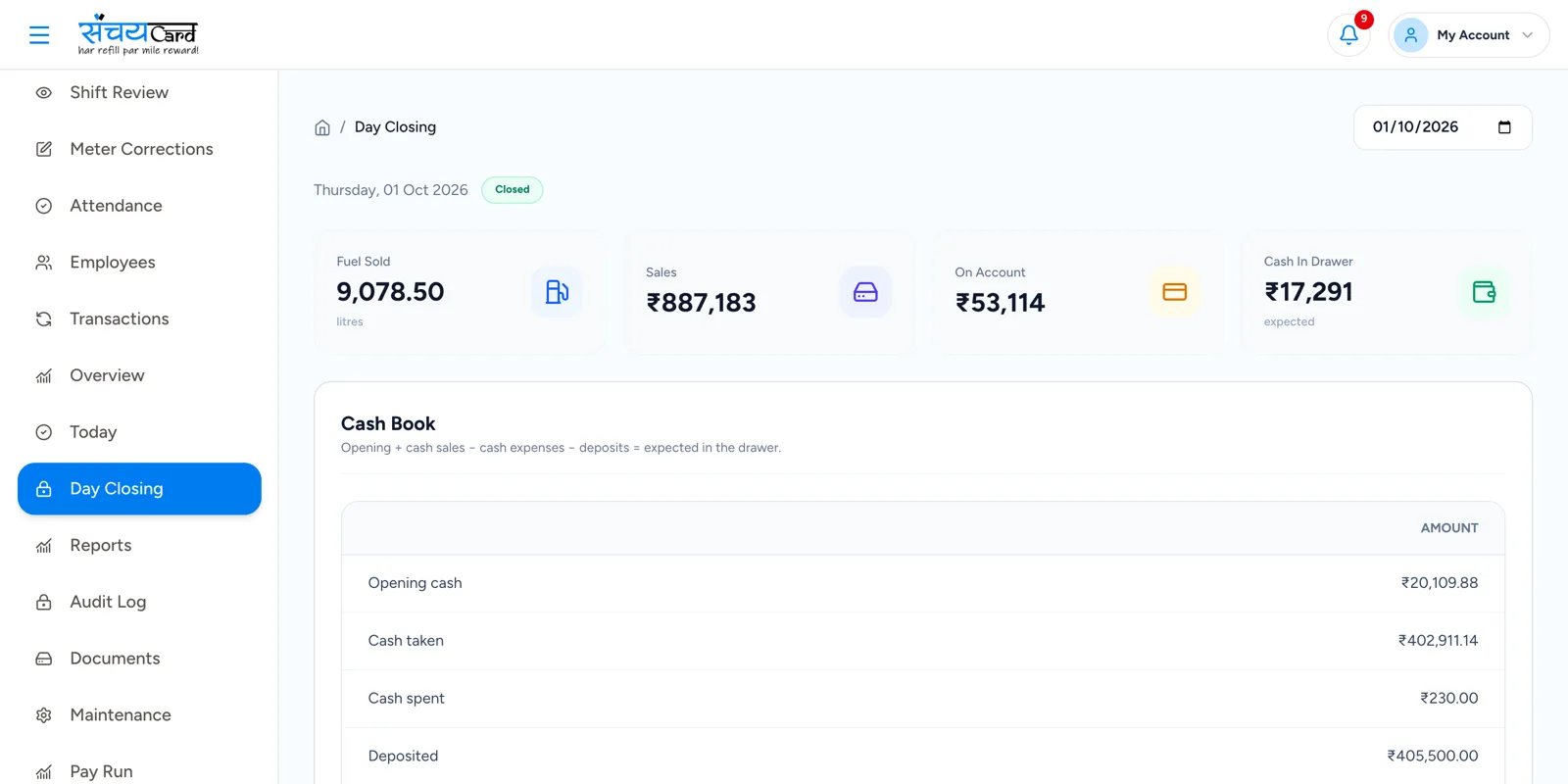
- One summary of sales, collections, expenses, purchases, stock and outstanding. Once approved, the day is locked.
- Accountant role
- Access to expenses, purchases, credit, payments, ledgers and reports.
- Scope
- The daily operational accounts of the pump. Your accountant prepares the statutory books from these records.
Petrol pump ka hisab, roz ka roz
The accounts of a petrol pump are not difficult. They are just many: nozzle sales, cash and UPI collection, credit given and recovered, tanker invoices, lubricant purchases, petty expenses, salary advances. When each one lives in a different register, the accountant spends the month collecting papers instead of checking figures.
Sanchay builds the daily accounts from the work itself. A meter reading becomes a sale. A tanker entry becomes a purchase. A credit fill goes to the customer ledger. By the time the day is closed, the accounts of that day are already written.
Each person works on their own part of the same records. The manager enters operational and maintenance expenses. The accountant handles financial expenses, purchases, credit, payments and ledgers. The owner logs in from a web browser to check outstanding, shortage and the closing of the day. Nobody copies figures from one book to another, so everybody sees the same numbers.
What the accounting side of Sanchay covers
The records an owner and an accountant ask for every day.
Customer ledger
Credit transactions and payments of every credit customer.
Outstanding and ageing
Who owes how much, and for how long.
Supplier ledger
Purchases, payments and outstanding payable to each supplier.
Expenses and petty cash
Daily expenses with category, payment mode, vendor and approval.
Cash and payment reconciliation
Expected amount against actual amount, shift-wise and day-wise.
Daily closing
The summary of the day, approved and locked.
Salary and advances
Salary, advances, deductions, incentives and payment history.
Financial reports
Sales, credit, expense and payment-wise reports.
Approvals and audit trail
Payment reversal and other changes recorded with user and reason.
Customer ledger, outstanding and ageing
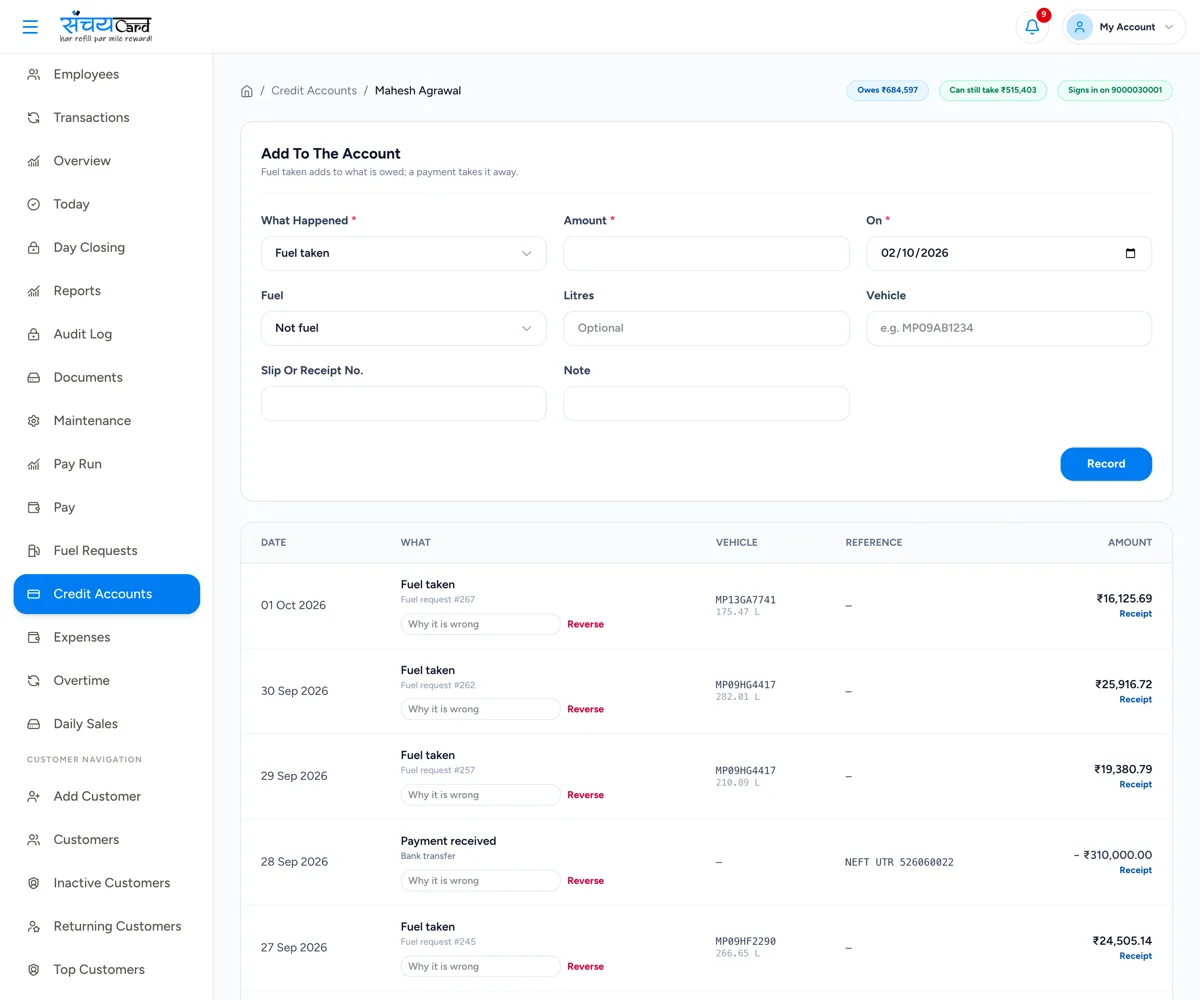
Every credit transaction is posted to the customer at the time of fuelling, so the ledger never waits for the weekend.
- Credit limit and credit period for each customer
- Customer ledger with transactions and payments
- Payment collection and payment history
- Outstanding amount and ageing report
- Customer statements
Purchases and supplier ledger
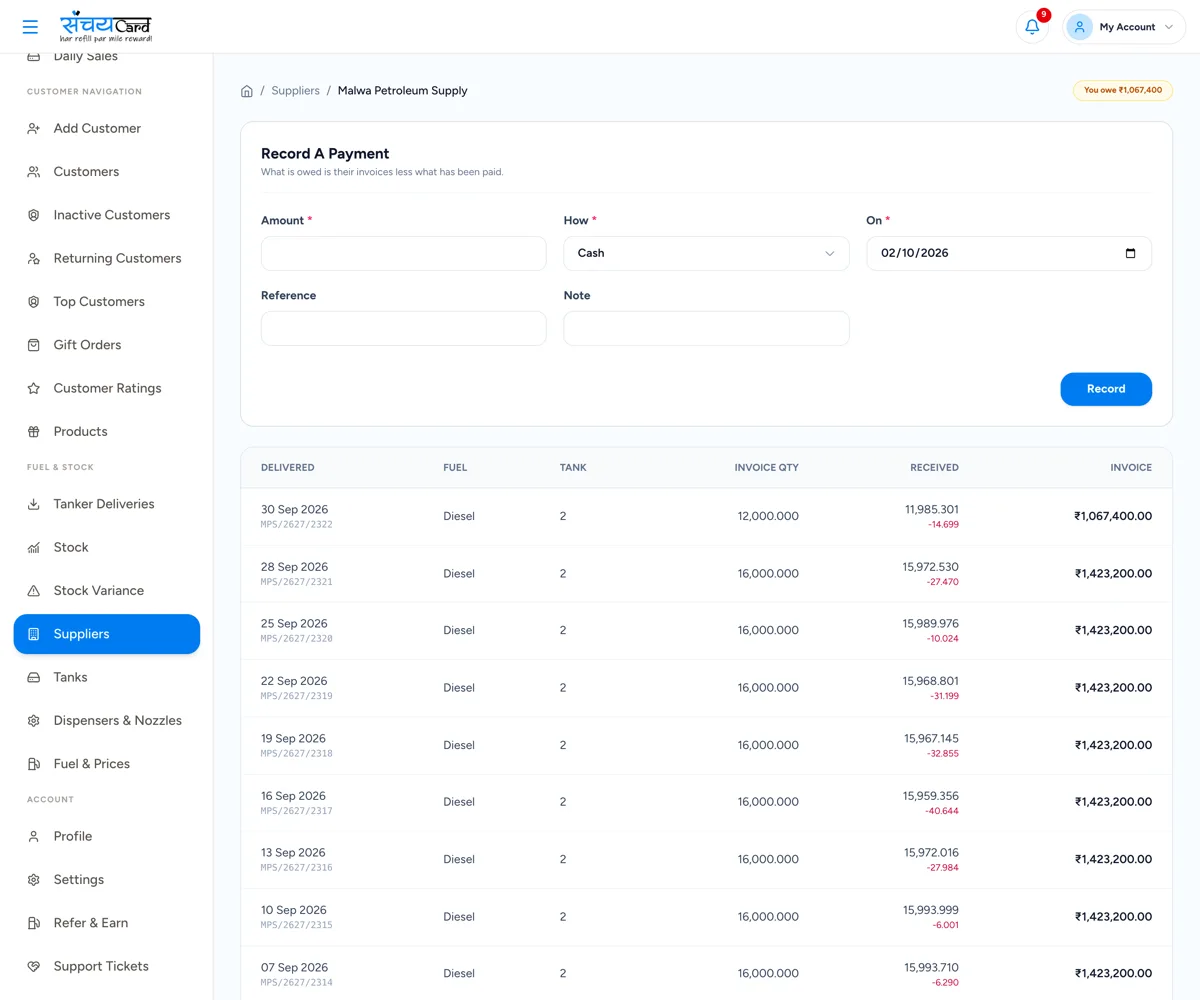
Fuel, lubricant and other purchases are recorded with invoice, quantity and rate, and each supplier has a ledger.
- Fuel purchase created from the tanker entry
- Invoice vs received quantity on record
- Payment status of every purchase
- Supplier ledger and outstanding payable
Expenses, petty cash and maintenance cost
Small payments from the cash of the day are recorded when they are made, not remembered at night.
- Expense categories, payment mode and vendor
- Petty cash
- Expense approval, with large expenses requiring authorization
- Maintenance cost recorded with the repair
- Category-wise and payment-wise expense reports

Cash reconciliation and daily closing
The day is not finished until the money matches the sale.
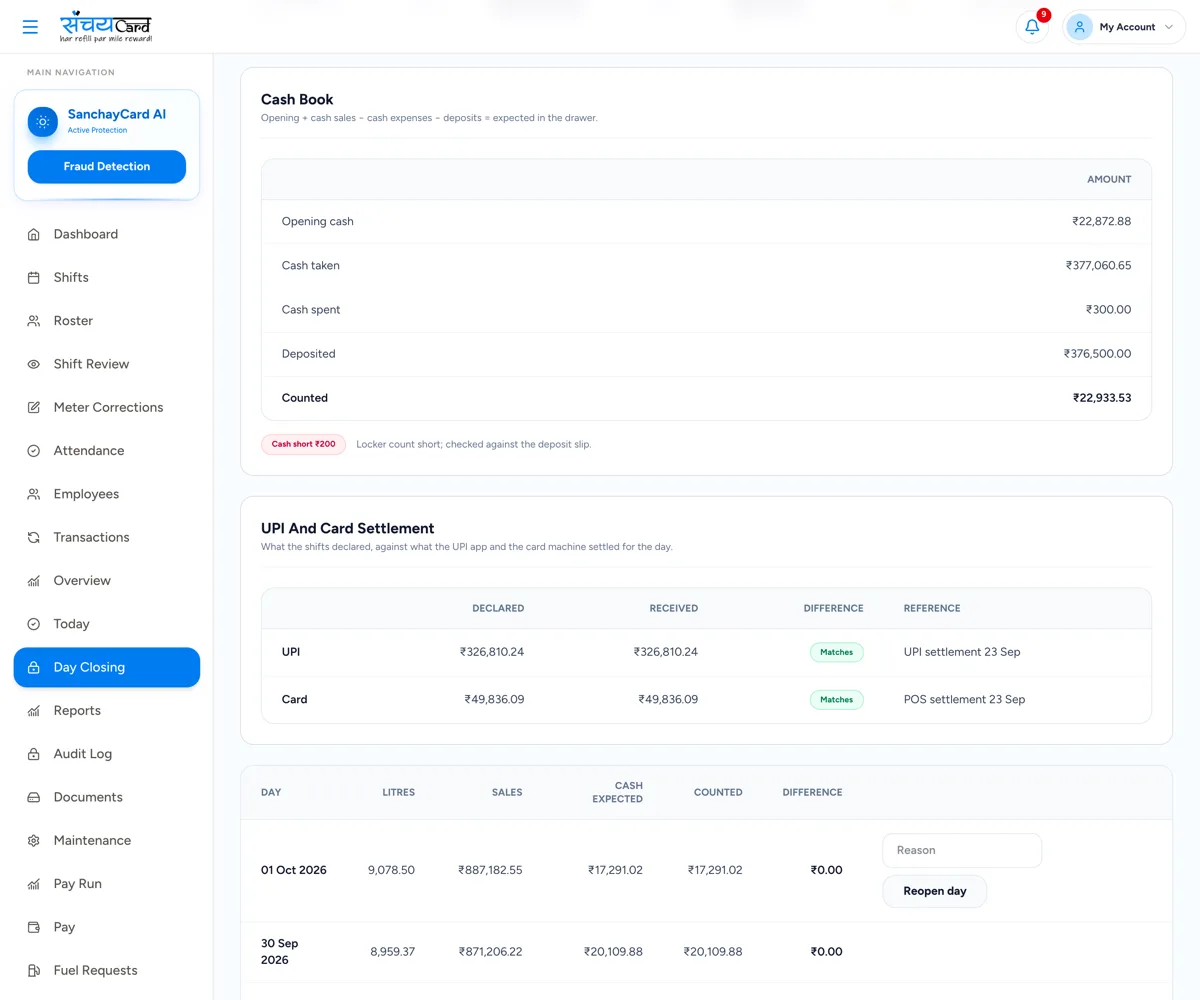
- Expected amount, actual amount and difference
- Shortage and excess shown shift-wise and day-wise
- Cash, UPI, card, credit, bank transfer and other methods
- Day summary of sales, collections, expenses, purchases, stock and outstanding
- Approved day locked against unauthorized editing
Accounts in registers vs accounts in Sanchay
The work is the same. The number of times you write it is not.
| Task | Registers and Excel | With Sanchay |
|---|---|---|
| Credit sale | Slip is written, then copied to the customer ledger later. | Recorded once against the customer; ledger and outstanding are updated. |
| Customer balance | Added up when the customer asks. | Outstanding and ageing are available at any time, and the customer sees the outstanding balance in their app. |
| Tanker invoice | Filed, then entered in the purchase register. | Purchase is created from the tanker entry and posted to the supplier ledger. |
| Petty expense | Paid from the drawer, often without an entry. | Entered with category, payment mode and vendor; approval when needed. |
| Cash shortage | Found at night, after all shifts are mixed. | Shown for each shift as expected amount, actual amount and difference. |
| Day closing | Totals copied from many registers. | One summary, approved and locked. |
| Corrections | Overwritten in the register. | Recorded with user, old value, new value, reason and time. |
What "accounting" means here
Sanchay keeps the daily operational accounts of your petrol pump: sales and collections, customer and supplier ledgers, expenses, purchases, salary records and the daily closing. These are the records your accountant needs to prepare the statutory books of the business.
The Accountant role in Sanchay has access to expenses, purchases, credit, payments, ledgers and reports — and to nothing on the forecourt that is not their work.
Accounting questions from pump owners
Because the money of a pump moves in many small entries every shift: cash, UPI, card, credit fills, recoveries, tanker invoices, petty expenses and salary advances. When they are written in separate registers, shortage and outstanding are found late. Accounting software records them as they happen and keeps the ledgers, reconciliation and daily closing up to date.
No. Billing is recording each sale: the meter reading, the payment mode, the credit customer and the vehicle. Accounting is what happens to that money afterwards: ledgers, outstanding, payables, expenses, reconciliation and closing. Sanchay does both in one system, so the sale recorded at the nozzle is the same figure the accountant sees.
A customer ledger for every credit customer and a supplier ledger for every supplier, with outstanding receivable, ageing and outstanding payable.
Yes. The Accountant role covers expenses, purchases, credit, payments, ledgers and reports. Every employee sees only what their role needs.
Each shift and each day is reconciled: the expected amount from sales is compared with the actual amount collected in cash, UPI, card, credit and other modes, and the difference is shown as shortage or excess.
Yes. Salary calculation, salary advances, deductions, incentives, bonus and salary payment history are kept for every employee, and approved overtime is included in the salary calculation.
Once approved, the day can be locked against unauthorized editing. Day reopening and payment reversal can require approval, and every critical change is recorded in the audit trail.
Yes. Book a demo and our team will show you the customer and supplier ledgers, reconciliation and daily closing in Sanchay before you decide.
Explore the Sanchay software
Close today's accounts today
Book a demo with our team and see how Sanchay runs your pump — from shifts and stock to staff and credit.